Connect CNC Manual: A Comprehensive Guide
Connect CNC manuals detail Ethernet network connections, PCMCIA LAN card setup, and UCCNC controller configuration. These guides assist with NC/PLC software installation and FANUC axis control.
Understanding CNC Connections
Establishing robust connections between CNC machines and control systems is paramount for efficient operation. These connections facilitate the transfer of G-code programs, enabling precise machining processes. Several methods exist, each with unique advantages and considerations. Ethernet connections are increasingly prevalent, offering high-speed data transfer and network integration capabilities. Utilizing a PCMCIA LAN card allows for wireless or wired network access, streamlining communication between the CNC controller and a PC.
Understanding device addressing – specifically bits and words – is crucial for proper communication. The PLC Connection Guide (EB Pro Ver.6.00.01) details device type formats and ranges for effective data exchange. Furthermore, successful connections rely on correctly installing and configuring NC and PLC software, often requiring the clearing of existing programs beforehand. The manual emphasizes a systematic approach to ensure seamless integration and optimal performance of the CNC system. Proper connection sequences, like those involving the Ethernet port, are also vital for stable operation.
Types of CNC Control Systems
Various CNC control systems dictate how a machine interprets and executes instructions, impacting connection methods. FANUC CNC systems, widely used in industry, feature specific axis control functions detailed in dedicated manuals. These systems often rely on PLC (Programmable Logic Controller) integration for auxiliary functions and safety interlocks. Understanding the interplay between NC (Numerical Control) and PLC software is essential for successful connection and operation.
UCCNC controllers represent another popular option, requiring specific setup procedures for optimal performance. The Connect CNC manual highlights the importance of establishing a stable communication link with these controllers. Furthermore, simulation software like CNC GUIDE aids in verifying program accuracy and connection integrity before actual machining. Different systems employ varying communication protocols, necessitating appropriate configuration of network connections, whether through Ethernet or PCMCIA LAN cards. The choice of control system influences the complexity of the connection process and the required expertise.
PLC Connection Guide: Fundamentals
Establishing a reliable connection between a CNC machine and its PLC is fundamental for coordinated operation. The PLC manages auxiliary functions – coolant control, part clamping, and safety circuits – while the CNC focuses on motion control. A robust connection ensures seamless data exchange, critical for automated manufacturing processes. Connect CNC manuals emphasize proper device addressing, utilizing bits and words to define input/output signals.
Understanding device type formats and ranges is crucial for accurate PLC programming. The manual often details specific memory locations within the PLC used for communication with the CNC. Ethernet connections are increasingly common, requiring network setup and IP address configuration. Prior to connection, verifying compatibility between the CNC and PLC communication protocols is essential. Troubleshooting often involves checking wiring, verifying IP addresses, and confirming correct device addressing within the PLC software. A solid grasp of these fundamentals streamlines the connection process and minimizes downtime.

Device Addressing: Bits and Words
Effective CNC-PLC connection relies heavily on precise device addressing, utilizing bits and words to represent discrete signals. A ‘bit’ represents a single on/off state, ideal for simple inputs like limit switches or sensor activation. Conversely, ‘words’ – typically 16 or 32 bits – handle more complex data, such as position values or speeds. Connect CNC manuals meticulously define the format and range for each device type, clarifying how the PLC interprets these signals.
Understanding the ‘B’ and ‘I’ designations is key; ‘B’ often signifies Boolean values (on/off), while ‘I’ represents integer data. Correctly mapping these addresses within the PLC program ensures the CNC receives accurate commands and feedback. Improper addressing leads to unpredictable behavior or complete system failure. The manual provides tables detailing the available address space and recommended usage. Careful attention to bit and word assignments is paramount for a stable and functional CNC system connection, enabling seamless communication and control.
Ethernet Connection Setup for CNC Machines
Establishing a robust Ethernet connection is crucial for modern CNC machine operation, enabling data transfer for program loading, remote monitoring, and diagnostics. Connect CNC manuals provide detailed instructions for configuring this connection, often outlining multiple methods to accommodate varying network infrastructures. A common approach involves utilizing a PCMCIA LAN card, requiring proper insertion and driver installation on the CNC control PC.
The manual emphasizes that the specific connection sequence – the order in which devices are powered on and configured – isn’t always critical, simplifying the setup process. However, ensuring correct IP address assignment and subnet mask configuration is vital for successful communication. These settings must align with the existing network. Following the manual’s guidance, users can reliably link their CNC machine to the network, unlocking advanced capabilities and streamlining workflow. Proper Ethernet setup is foundational for efficient CNC operation and integration.
PCMCIA LAN Card Configuration
The PCMCIA LAN card provides a pathway for establishing Ethernet connections on CNC machines lacking integrated network interfaces. Connect CNC manuals detail the physical installation process, emphasizing careful insertion of the card into the designated PCMCIA slot on the CNC control PC. Following insertion, the operating system should detect the new hardware, prompting for driver installation.
These manuals typically direct users to a specific location – often a provided CD or a download link – to obtain the correct drivers for the PCMCIA card. Correct driver installation is paramount; without it, the card will not function, and network connection will be impossible. The manual may also include troubleshooting steps for common installation issues, such as driver conflicts or hardware detection failures. Once the drivers are successfully installed, the network interface will appear in the system settings, allowing for IP address configuration and network setup, enabling seamless communication.
FANUC CNC Axis Control Functions
Connect CNC manuals dedicated to FANUC systems thoroughly document axis control functionalities, crucial for precise machine operation. These manuals detail parameters governing each axis’s movement – X, Y, Z, and rotational axes – outlining how to configure speed limits, acceleration rates, and deceleration profiles. Understanding these parameters is vital for optimizing machining performance and preventing damage to the machine or workpiece.
The documentation explains functions like jogging, where axes are moved incrementally, and rapid traverse, enabling quick positioning between machining operations. Furthermore, the manuals cover advanced features such as coordinate system shifts, tool radius compensation, and interpolation methods (linear, circular, and spline). Proper setup of these functions, guided by the manual, ensures accurate toolpaths and high-quality finished parts. Axis control connections and parameter adjustments are often accessed through the CNC’s control panel or a dedicated programming interface.
NC and PLC Software Installation
Connect CNC manuals emphasize a critical prerequisite before installing new NC (Numerical Control) or PLC (Programmable Logic Controller) software: clearing existing programs. This ensures compatibility and prevents conflicts that could disrupt machine operation. The manuals provide step-by-step instructions for safely removing the current software, often involving specific boot sequences or dedicated utility programs.
Installation procedures are meticulously detailed, covering software transfer methods – typically via USB, Ethernet, or serial connections – and the necessary configuration settings. The documentation highlights the importance of verifying software integrity after installation, often through checksum verification or functional testing. Proper licensing procedures are also explained, ensuring compliance with software agreements. Successful setup relies on following the manual’s guidance precisely, as incorrect installation can lead to machine downtime and costly repairs. These manuals are essential for maintaining a stable and efficient CNC system.
Clearing Existing Software
Connect CNC manuals consistently stress the necessity of completely removing pre-existing NC or PLC software before initiating a new installation. This preventative measure minimizes the risk of operational conflicts and ensures optimal system performance. The process often involves accessing a specific boot menu, typically activated during machine startup, and selecting an option to initialize or erase the control memory.
Alternatively, dedicated software utilities provided by the CNC manufacturer may be employed to systematically delete old programs and configuration files. The manuals caution against interrupting this process, as it could potentially corrupt the control system. Following the complete removal, a verification step is recommended to confirm that no remnants of the previous software remain. This meticulous approach safeguards against unforeseen errors and guarantees a clean slate for the new software installation, contributing to a stable and reliable CNC operation. Proper execution, guided by the manual, is paramount.
UCCNC Controller Setup
Connect CNC manuals detail that, after establishing a stable network connection – often via Ethernet – the UCCNC controller requires careful configuration. This involves installing the necessary UCCNC software on a compatible PC and establishing communication parameters within the software interface. The manual emphasizes verifying the correct COM port assignment, crucial for data transmission between the PC and the CNC machine’s control board.
Configuration also includes defining machine parameters such as axis travel limits, acceleration rates, and backslash compensation. Precise input of these values, as outlined in the manual, is vital for accurate and safe machine operation. Furthermore, the manual guides users through the process of calibrating the controller to ensure proper synchronization between the software commands and the physical movements of the CNC machine. Successful UCCNC setup allows for seamless control and monitoring of the CNC machine’s functions, enabling efficient machining processes.
CNC GUIDE Simulation Software Installation
Connect CNC manuals frequently recommend utilizing simulation software like CNC GUIDE to validate programs before execution on the actual machine. Installation typically begins with downloading the free trial version from the official source, ensuring compatibility with your operating system. The manual stresses the importance of following the on-screen prompts during the installation process, accepting license agreements and selecting the desired installation directory.
Post-installation, the manual guides users through initial software setup, which may involve configuring post-processors to match the specific CNC machine model. This ensures accurate simulation of G-code programs. Users are advised to test the installation by loading a sample program and verifying that the simulated machine movements correspond to the intended toolpath. CNC GUIDE allows for virtual machining, identifying potential errors or collisions without risking damage to the physical CNC machine, a crucial step highlighted in comprehensive connect CNC manuals.
Network Connection Methods
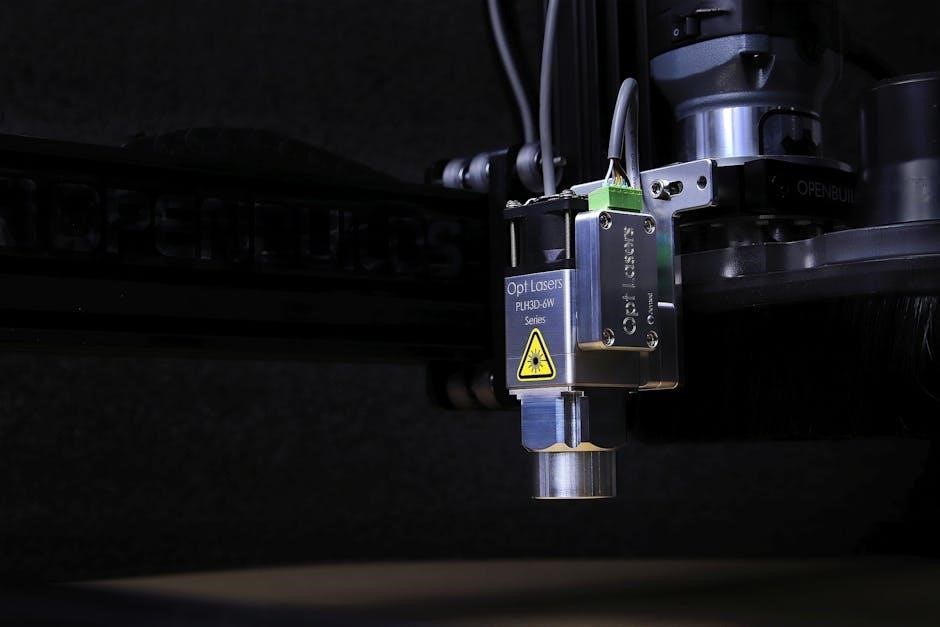
Connect CNC manuals detail several network connection methods for integrating CNC machines into a production environment. Ethernet connectivity is the most prevalent, offering high-speed data transfer for program uploads, data logging, and remote monitoring. These manuals often describe utilizing a PCMCIA LAN card for older machines lacking integrated Ethernet ports, outlining the insertion and configuration process for establishing a network link.
Beyond PCMCIA, modern CNC machines increasingly support direct Ethernet connections via standard RJ45 ports. The manual emphasizes the importance of proper IP address configuration, ensuring the CNC machine resides on the same network subnet as the control PC. Wireless network connections, while less common, are also supported by some models, requiring careful security considerations. Regardless of the method, the manual stresses verifying network connectivity using ping tests before attempting data transfer, ensuring a stable communication channel for seamless CNC operation and efficient workflow.
Connection Sequence: Ethernet Port
The connect CNC manual outlines a straightforward Ethernet port connection sequence. First, physically connect an Ethernet cable from the CNC machine’s Ethernet port to an available port on your control PC or network switch. The manual notes that the specific connection sequence isn’t critical; the system typically auto-negotiates the connection. However, verifying the physical link is essential – check the Ethernet port LEDs on both the CNC machine and the PC/switch for activity.
Next, configure the IP address settings on both the CNC machine and the control PC. The manual details accessing the CNC’s control panel to set a static IP address or enable DHCP for automatic assignment. Ensure both devices are on the same subnet. After confirming network settings, the manual instructs to test connectivity using the ‘ping’ command from the PC’s command prompt, verifying successful communication. Finally, you are prepared to setup the UCCNC controller and initiate CNC operations, benefiting from a stable Ethernet link.
Troubleshooting Common Connection Issues
The connect CNC manual dedicates a section to resolving frequent connection problems. Communication errors are often the first hurdle; these can stem from incorrect IP address configurations, faulty Ethernet cables, or network firewall restrictions. The manual advises verifying IP settings on both the CNC machine and the control PC, ensuring they reside on the same subnet. Checking the physical cable and temporarily disabling firewalls are also recommended steps.
Driver conflicts represent another common issue. The manual suggests checking Device Manager on the control PC for any flagged hardware or driver errors related to the CNC’s network adapter. Reinstalling or updating the network adapter drivers, obtained from the CNC manufacturer’s website, can often resolve these conflicts. If problems persist, the manual recommends consulting the CNC manufacturer’s support resources or a qualified technician for further assistance, emphasizing the importance of systematic troubleshooting.
Communication Errors
The connect CNC manual identifies communication errors as a primary challenge during network integration. These errors frequently manifest as an inability for the control PC to establish a stable connection with the CNC machine. Initial troubleshooting, as outlined in the manual, involves verifying the physical network connection – ensuring the Ethernet cable is securely connected to both devices and is not damaged.
The manual stresses the critical importance of correct IP address configuration; Mismatched or conflicting IP addresses are a common cause of communication failures. Users are instructed to confirm that both the CNC and the PC are on the same subnet and that there are no duplicate IP addresses assigned within the network. Furthermore, the manual advises checking firewall settings on the PC, as restrictive firewall rules can block communication with the CNC. Temporarily disabling the firewall can help determine if it’s the source of the problem.
Driver Conflicts
Driver conflicts represent a significant hurdle when establishing a stable connection with a CNC machine, as detailed within the comprehensive CNC manual. The manual emphasizes that outdated, corrupted, or incompatible drivers for the PCMCIA LAN card or the CNC controller can disrupt communication. It recommends a systematic approach to identifying and resolving these conflicts.
The first step, according to the manual, is to access the Device Manager on the control PC and check for any devices flagged with errors or warnings. If a conflict is detected, the manual advises uninstalling the existing driver and then reinstalling the latest version obtained directly from the CNC machine manufacturer’s website. It’s crucial to ensure the driver is compatible with the PC’s operating system. The manual also cautions against having multiple instances of the same driver installed, as this can lead to unpredictable behavior. A clean installation is always preferred.
Manual Interpretation: Key Sections
Effective manual interpretation is paramount for successful CNC machine connectivity, as highlighted in the Connect CNC manual. Key sections focus on establishing Ethernet network connections, detailing the importance of proper PCMCIA LAN card configuration and subsequent network setup. The manual stresses understanding device addressing – specifically bit and word formats – for seamless communication between the PC and the CNC controller.
Furthermore, the manual dedicates significant attention to NC and PLC software installation procedures, including crucial steps for clearing existing software to prevent conflicts. It provides detailed instructions for FANUC CNC axis control functions, enabling users to optimize machine performance. The manual also outlines the process for installing CNC GUIDE simulation software, a valuable tool for testing programs before deployment. Understanding these sections allows for efficient troubleshooting and ensures a stable, reliable connection, maximizing productivity and minimizing downtime.
Cylinder Installation and Maintenance
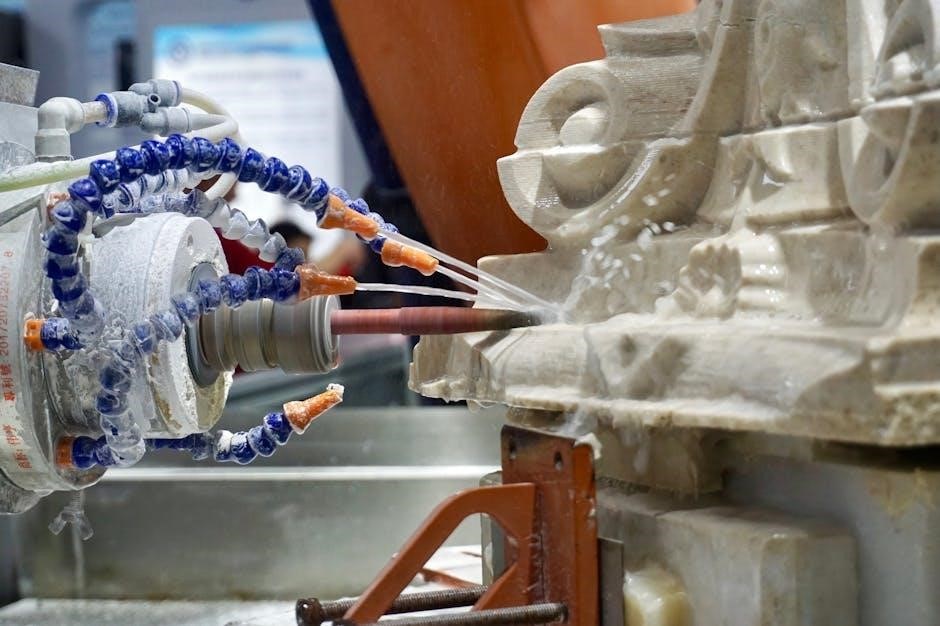
While seemingly disparate, cylinder functionality is often integrated within CNC machine operations, and proper installation is crucial for overall system performance. The Connect CNC manual, though primarily focused on connectivity, briefly notes the importance of reinstalling the cylinder after maintenance or software updates. This seemingly minor step ensures the physical components align correctly with the programmed instructions relayed through the established network connection.
Maintenance of these cylinders, though not extensively detailed within the core connectivity manual, is vital for consistent operation. Regular checks for leaks, proper lubrication, and secure mounting are essential. A malfunctioning cylinder can introduce errors that manifest as communication issues or inaccurate movements, potentially disrupting the entire CNC process. Therefore, diligent cylinder upkeep complements the robust connection protocols outlined in the manual, contributing to a stable and efficient CNC workflow. Proper installation prevents unexpected disruptions.
Breece Hall and CNC ⎯ A Distraction? (Addressing irrelevant search results)
The appearance of search results concerning NFL running back Breece Hall, and even contract negotiations with the New York Jets, alongside queries for “Connect CNC manual” highlights a common issue with online searches: ambiguity and algorithmic drift. While fascinating for football fans, Breece Hall’s potential four-year, $50 million contract has absolutely no bearing on establishing reliable connections for Computer Numerical Control machines.
These irrelevant results underscore the importance of precise search terms. When seeking information on CNC connectivity, focusing on keywords like “CNC Ethernet setup,” “PLC connection guide,” or “UCCNC controller connection” will yield far more accurate results than broad terms. The Connect CNC manual itself prioritizes clear, technical language to avoid such confusion. It’s a reminder that effective troubleshooting and setup require focused information, filtering out extraneous data like athlete contracts and Iowa State football projections.
Contract Negotiations and CNC (Addressing irrelevant search results)
The surfacing of articles detailing contract negotiations – specifically, Breece Hall’s potential deal with the New York Jets – when searching for “Connect CNC manual” exemplifies the challenges of search engine relevance. Discussions of a four-year, $50 million contract are entirely unrelated to establishing stable connections between CNC machines, PLCs, and control PCs. This demonstrates how algorithms can sometimes prioritize trending topics over precise technical needs.
This phenomenon highlights the necessity of refined search strategies. Users seeking guidance on CNC connectivity should employ specific keywords such as “CNC Ethernet setup,” “PLC connection guide,” or “UCCNC controller configuration.” The Connect CNC manual itself emphasizes clarity and technical accuracy, aiming to eliminate ambiguity. Focusing on these targeted terms will filter out irrelevant results concerning athlete contracts and ensure access to the essential information required for successful CNC machine setup and operation.
Iowa State and CNC (Addressing irrelevant search results)
The inclusion of information regarding Breece Hall’s collegiate football career at Iowa State University in searches for a “Connect CNC manual” underscores the issue of search engine result contamination. While Hall’s performance for the Cyclones is noteworthy, it bears no relation to the technical procedures involved in establishing communication between CNC controllers, PCs, and peripheral devices. This illustrates a clear disconnect between user intent and algorithmic response.
The Connect CNC manual prioritizes precise, technical documentation concerning Ethernet setup, PCMCIA LAN card configuration, and software installation – areas entirely separate from collegiate athletics. To refine search results, users should focus on keywords directly related to CNC connectivity, such as “CNC GUIDE simulation software installation,” “FANUC axis control functions,” or “PLC device addressing.” Avoiding broad terms and concentrating on specific technical aspects will minimize the appearance of irrelevant results concerning Iowa State football and ensure access to the necessary information for successful CNC machine operation and maintenance.
Future Trends in CNC Connectivity
The evolution of CNC connectivity is rapidly shifting towards more robust and integrated systems. Current Connect CNC manuals focus on Ethernet and PCMCIA solutions, but future trends point to widespread adoption of Industrial Internet of Things (IIoT) protocols. Expect increased reliance on wireless communication – specifically, Time-Sensitive Networking (TSN) – to deliver deterministic, low-latency data transfer crucial for synchronized machine operations.
Furthermore, cloud-based CNC control and monitoring are gaining traction, enabling remote diagnostics, predictive maintenance, and over-the-air software updates. This necessitates enhanced cybersecurity measures, detailed in future manual revisions. Simplified setup procedures, potentially utilizing auto-configuration protocols, will reduce reliance on specialized technicians. The integration of augmented reality (AR) for guided maintenance and troubleshooting, accessible via network connections, is also anticipated. Ultimately, the Connect CNC manual will evolve to encompass these advancements, ensuring seamless integration and optimized performance in the modern manufacturing landscape.
Safety Precautions During Connection
Prior to establishing any connection to your CNC machine, as detailed in this manual, always ensure the main power supply is completely disconnected and locked out/tagged out. This prevents accidental machine activation during the setup process. Never attempt to connect or disconnect cables while power is applied, as this poses a significant electrical shock hazard. Verify all grounding connections are secure and compliant with local electrical codes.
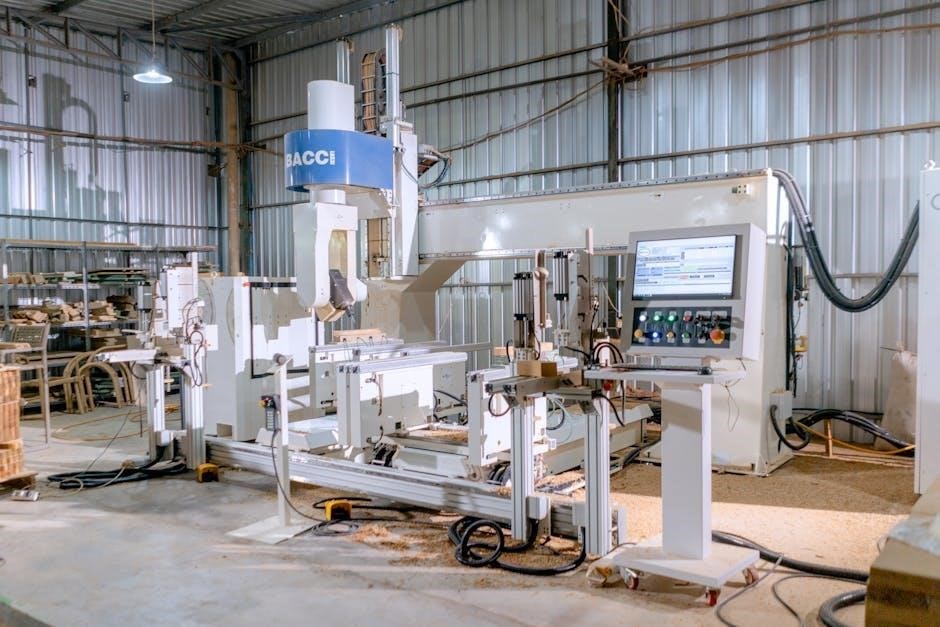
When installing software – NC or PLC – referenced in the manual, utilize verified sources to avoid malware that could compromise machine control. Exercise caution when working with network connections; a compromised network can lead to unauthorized access and potential damage. Always consult the machine’s electrical diagrams before making any connections. Wear appropriate personal protective equipment (PPE), including safety glasses and insulated gloves. Following these precautions, outlined in the Connect CNC manual, will ensure a safe and efficient connection process.