Reverse Total Shoulder Replacement Exercises: A Comprehensive Guide
This guide details post-operative rehabilitation following reverse total shoulder replacement (rTSA), differing from total shoulder protocols due to rotator cuff involvement.
Various protocols—Torbay, Brian J. Cole, and Macgroarty—offer specific exercise guidelines, emphasizing precautions like sling usage and avoiding dislocation for optimal recovery.
Rehabilitation progresses through phases, starting with immediate post-op care and advancing to strengthening, guided by clinician assessment and patient progress.
Understanding Reverse Total Shoulder Replacement (rTSA)
Reverse Total Shoulder Replacement (rTSA) is a specialized surgical procedure designed for patients with significant rotator cuff damage, often those experiencing shoulder pain and limited function despite traditional treatments. Unlike a traditional total shoulder replacement, rTSA reverses the anatomy of the shoulder joint. The glenoid component (socket) is placed where the humeral head normally sits, and a prosthetic humeral head is attached to the remaining humerus.
This design shifts the lifting function from the damaged rotator cuff to the deltoid muscle, providing improved pain relief and range of motion. rTSA is frequently considered for individuals with severe cuff tear arthropathy or those who have failed previous shoulder surgeries. Understanding the altered biomechanics is crucial, as rehabilitation protocols differ significantly from those used after conventional shoulder replacements, focusing on deltoid strengthening and controlled movements.
The success of rTSA relies heavily on adherence to a structured rehabilitation program.
The Unique Rehabilitation Needs of rTSA
Rehabilitation following rTSA presents unique challenges due to the altered shoulder biomechanics and the often compromised or absent rotator cuff. Traditional rehabilitation protocols emphasizing rotator cuff strengthening are less effective and potentially detrimental. Instead, the focus shifts to maximizing deltoid function, as this muscle becomes the primary mover of the shoulder.
Early phases prioritize pain and edema control, gentle range of motion, and scapular stabilization. As healing progresses, strengthening exercises target the deltoid, while carefully controlled movements prevent impingement and dislocation. Protocols like Torbay, Cole, and Macgroarty offer specific timelines and exercise progressions, but individualization is key.
Precautions are paramount, particularly avoiding shoulder dislocation and protecting the surgical repair during the initial 8-12 weeks.

Phase 1: Immediate Post-Operative Care (0-2 Weeks)
Initial care centers on sling usage—worn constantly, removed briefly for gentle exercises. Pain management and early ROM exercises are crucial, prioritizing comfort and minimizing stiffness.
Sling Usage and Precautions
Following reverse total shoulder replacement, consistent sling use is paramount during the initial phase (0-2 weeks), typically worn day and night. The sling’s primary function is to immobilize the shoulder, protecting the surgical repair and minimizing stress on the newly implanted components.
However, the sling is removed briefly for controlled exercises, as directed by the physical therapist. Strict adherence to precautions is vital; avoid shoulder dislocations by refraining from reaching behind the back or externally rotating the arm beyond prescribed limits. Patients should not lift any weight or apply force while the arm is outside the sling.
Gradual weaning from the sling typically begins around 4-6 weeks, guided by the surgeon and therapist’s assessment of healing and range of motion. Proper sling fit is essential to ensure adequate support without causing discomfort or skin irritation. Report any sling-related issues, such as skin breakdown or excessive pain, to your healthcare provider immediately.
Early Range of Motion (ROM) Exercises
Initiating gentle range of motion (ROM) exercises immediately post-operatively is crucial, even while wearing the sling. These exercises aim to prevent stiffness and promote early joint mobility, but must be performed within pain-free limits. Focus initially on pendulum exercises, allowing the arm to hang relaxed and swing gently in small circles.
Passive ROM, where a therapist moves the arm, is also implemented to restore flexibility. Avoid active motion – using your own muscles to move the arm – during this initial phase. Emphasis is placed on forward flexion and gentle external rotation, carefully monitored to prevent exceeding safe ranges.
These early ROM exercises are performed frequently throughout the day, as prescribed by the physical therapist. Pain management is key; exercises should not exacerbate discomfort. Consistent, controlled movements lay the foundation for more advanced rehabilitation stages.
Pain Management Strategies
Effective pain management is paramount during the initial post-operative period following reverse total shoulder replacement (rTSA). A multi-modal approach is typically employed, combining prescribed pain medication with non-pharmacological techniques. Adherence to the prescribed medication schedule is vital for controlling discomfort and facilitating participation in rehabilitation.
Ice application is highly recommended to reduce swelling and alleviate pain, typically applied for 15-20 minutes several times a day. Maintaining the arm in a comfortable position, supported by a sling, also minimizes pain. Gentle breathing exercises and relaxation techniques can further aid in pain control.
Communication with the surgical team is essential; report any escalating or unmanageable pain. Early and consistent pain management allows for better engagement in prescribed exercises, promoting a smoother recovery process.

Phase 2: Early Rehabilitation (2-6 Weeks)
This phase focuses on regaining gentle motion and initiating scapular control, utilizing pendulum exercises, passive ROM, and stabilization drills for recovery.
Gentle Pendulum Exercises
Pendulum exercises are a cornerstone of early rTSA rehabilitation, initiated during the 2-6 week timeframe. These exercises gently mobilize the shoulder joint without actively engaging shoulder muscles, minimizing stress on the surgical repair.
To perform pendulum exercises, lean forward, supporting yourself with your non-operative arm. Allow the operative arm to hang freely, relaxed. Initiate small, circular motions – forward, backward, and side-to-side – using your body weight as the driving force, not your shoulder muscles.
Focus on small, controlled movements, avoiding any discomfort or pain. Gradually increase the range of motion as tolerated. Perform 10-20 repetitions in each direction, several times a day. These exercises promote early tissue mobilization, reduce stiffness, and prepare the shoulder for more active movements in subsequent phases. Remember to prioritize pain-free movement throughout the exercise session.
Passive Range of Motion (PROM)
Passive Range of Motion (PROM) exercises, typically initiated in the 2-6 week post-operative phase, are crucial for restoring shoulder mobility after rTSA. Unlike active movements, PROM involves an external force – usually a therapist – gently moving the arm through its range of motion, while the patient remains relaxed.
PROM focuses on flexion, abduction, and external rotation, carefully avoiding any forceful movements or impingement. The therapist monitors the patient’s response, ensuring exercises remain pain-free. This technique helps prevent stiffness, improves joint lubrication, and maintains tissue extensibility.

Consistent PROM is vital, often performed several times a week under the guidance of a physical therapist. It’s essential to adhere to precautions, particularly avoiding shoulder dislocation, and respecting the limitations imposed by the surgical repair. Gradual progression is key to achieving optimal shoulder function.
Scapular Stabilization Exercises
Scapular stabilization exercises are integral to rTSA rehabilitation, beginning in the early phases (2-6 weeks) and continuing throughout the recovery process. These exercises focus on strengthening the muscles that control scapular movement – the shoulder blade – providing a stable base for arm function.
Common exercises include scapular retractions (squeezing shoulder blades together), protractions (rounding the upper back), and upward/downward rotations. These can be performed seated or standing, often with minimal or no resistance initially.
Strengthening these muscles improves shoulder mechanics, reduces pain, and enhances overall shoulder stability. Proper scapular control is particularly important in rTSA, as the altered shoulder anatomy relies heavily on scapular movement for functional range of motion. Consistent performance, guided by a therapist, is crucial for optimal outcomes.

Phase 3: Intermediate Rehabilitation (6-12 Weeks)
This phase introduces active-assisted range of motion, light resistance for external rotation and forward flexion, and initiates Codman exercises to restore shoulder function.
Active-Assisted Range of Motion (AAROM)
AAROM exercises are crucial during the intermediate phase (6-12 weeks), bridging the gap between passive motion and independent movement. These exercises involve the patient initiating the movement while the therapist provides gentle assistance to complete the range.
Focus areas include forward flexion, abduction, and external rotation. For flexion, the patient attempts to lift their arm forward, and the therapist assists if needed, ensuring smooth, controlled motion. Similarly, for abduction, the patient moves the arm away from the body with therapist support.
External rotation AAROM is performed with the elbow bent at 90 degrees, and the patient rotates the forearm outward, again with assistance. The goal is to gradually increase the patient’s ability to control and perform these movements independently, improving shoulder function and reducing reliance on external support. Precise adherence to the rehabilitation protocol is essential, and any discomfort should be immediately reported to the therapist.
Light Resistance Exercises – External Rotation

Initiating light resistance exercises for external rotation typically occurs during the intermediate rehabilitation phase (6-12 weeks). These exercises aim to strengthen the muscles responsible for rotating the arm outward, crucial for overall shoulder function post-rTSA.
Theraband exercises are commonly used, starting with minimal resistance and gradually increasing as strength improves. The patient maintains a 90-degree elbow bend, keeping the upper arm close to the body, and rotates the forearm outward against the resistance of the band.
Proper form is paramount; focus on controlled movements and avoid compensating with other muscle groups. Begin with 10-15 repetitions, performing 2-3 sets. Monitor for any pain or discomfort, and adjust the resistance accordingly. These exercises contribute to stabilizing the shoulder joint and restoring functional movement patterns, always following the prescribed rehabilitation protocol.
Light Resistance Exercises – Forward Flexion
Introducing light resistance for forward flexion during the intermediate phase (6-12 weeks) is vital for regaining the ability to lift the arm forward. This exercise strengthens the deltoid and other contributing muscles, essential for daily activities post-rTSA.
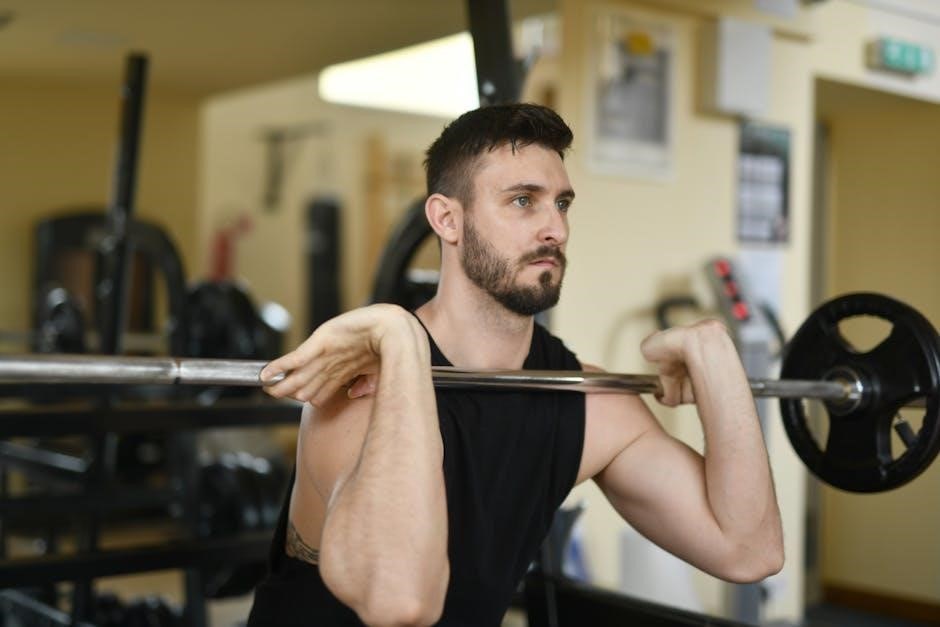
Theraband or light dumbbells can be utilized, starting with minimal weight. The patient stands with the arm straight, or slightly bent, and slowly raises it forward, keeping the movement controlled and avoiding arching the back.
Focus on a smooth, pain-free range of motion. Begin with 10-15 repetitions, completing 2-3 sets. Pay attention to any discomfort, and modify the weight or range of motion as needed. These exercises enhance shoulder mobility and contribute to restoring functional arm elevation, always adhering to the established rehabilitation guidelines.
Initiating Codman Exercises
Codman exercises, typically introduced during the intermediate rehabilitation phase (6-12 weeks), are pendulum-style movements designed to gently improve shoulder range of motion and reduce stiffness post-rTSA. These exercises utilize the body’s weight to assist movement, minimizing stress on the surgical repair.
The patient leans forward, supporting themselves with the non-operative arm, allowing the operative arm to hang freely. Gentle circular motions, forward and backward swings, and side-to-side movements are performed, initiating small, controlled arcs.
Focus on relaxation and avoiding active muscle contraction. Perform 10-15 repetitions in each direction, several times a day. These exercises promote synovial fluid circulation and gradually restore shoulder flexibility, contributing to improved function and reduced pain, always within the prescribed protocol.
Phase 4: Advanced Rehabilitation (12+ Weeks)
This phase focuses on regaining full active range of motion and strength, emphasizing deltoid and, if applicable, rotator cuff exercises for functional recovery.
Active Range of Motion (AROM)
Achieving active range of motion is a cornerstone of advanced rTSA rehabilitation, signifying improved neuromuscular control and shoulder function. Patients actively initiate and control movements without assistance, building upon previous gains in passive and active-assisted ranges.
Exercises include forward flexion, abduction, external rotation, and internal rotation, performed within pain-free limits. Focus is on smooth, controlled movements, avoiding compensatory patterns. Wall slides, table slides, and pendulum exercises, now performed independently, contribute to AROM gains.
Progression involves increasing the repetitions and sets, as tolerated, while maintaining proper form. Clinicians monitor for fatigue and adjust the program accordingly. AROM exercises are crucial for restoring functional use of the shoulder, enabling activities of daily living and participation in recreational pursuits. Consistent effort and adherence to the prescribed protocol are vital for optimal outcomes.
Strengthening Exercises – Deltoid Focus
Deltoid strengthening is paramount in rTSA rehabilitation, as it becomes the primary shoulder abductor and initiator of forward flexion due to the altered biomechanics. Exercises target all three deltoid heads – anterior, middle, and posterior – to ensure balanced strength and function.
Common exercises include scapular protraction/retraction with resistance bands, side-lying abduction, and forward raises. External rotation with resistance also engages the posterior deltoid. Progressive resistance is key, starting with light weights or bands and gradually increasing the load as strength improves.
Proper form is crucial to avoid compensatory movements and ensure effective deltoid activation. Clinicians closely monitor technique and provide feedback. Strengthening the deltoid enhances shoulder stability, improves functional capacity, and allows patients to return to desired activities with confidence.
Strengthening Exercises – Rotator Cuff (if applicable)
Rotator cuff strengthening post-rTSA is nuanced, as the native rotator cuff’s role is often diminished or absent. However, if residual rotator cuff tissue remains and is deemed viable by the surgeon, targeted exercises are beneficial for enhancing stability and optimizing shoulder function.
Exercises typically begin with isometric contractions, progressing to light resistance external and internal rotations using resistance bands or dumbbells. Scaption exercises also contribute to rotator cuff engagement. The focus isn’t on restoring full rotator cuff power, but rather on utilizing any remaining function to improve control.
Careful monitoring is essential to avoid overstressing the remaining tissue. Pain is a key indicator; exercises should be modified or discontinued if discomfort arises. Strengthening these muscles, when possible, complements deltoid strengthening for a more balanced and functional recovery.
Proprioceptive Exercises
Proprioception, the body’s awareness of its position in space, is often impaired after rTSA. Restoring this sense is crucial for regaining coordinated movement and preventing re-injury. These exercises aim to retrain the neuromuscular system to accurately sense shoulder position.
Initial exercises involve weight shifts and reaching activities with visual feedback, gradually progressing to closed-chain exercises like wall slides and table top exercises. Perturbations, gentle pushes to challenge balance, can also be incorporated. Utilizing unstable surfaces, such as foam pads, further enhances proprioceptive retraining.
These exercises should be performed slowly and deliberately, focusing on controlled movements. The goal is not strength, but rather improved awareness and control. Consistent practice is key to restoring optimal proprioception and functional shoulder stability post-rTSA.
Specific Exercise Protocols & Guidelines
Multiple rehabilitation pathways exist for rTSA, including Torbay, Brian J. Cole, and Macgroarty protocols, each offering unique timelines and exercise progressions for optimal recovery.
Torbay Protocol Considerations
The Torbay protocol emphasizes a gradual progression, initially focusing on pain and edema control in the immediate post-operative phase. Sling use is typically continued for four to six weeks, with gradual weaning guided by clinical assessment.
Early exercises prioritize gentle pendulum movements and passive range of motion (PROM) to prevent stiffness, while actively avoiding shoulder dislocation. Scapular stabilization exercises are introduced early to promote proper biomechanics.
As healing progresses, active-assisted range of motion (AAROM) is incorporated, followed by light resistance exercises targeting external rotation and forward flexion. Codman exercises are initiated to improve shoulder mobility.
Throughout the Torbay protocol, careful attention is paid to protecting the surgical repair and recognizing potential complications. Progression is individualized, based on the patient’s response and functional goals.
Brian J. Cole, MD, MBA Protocol Highlights
The Brian J. Cole protocol, copyrighted in 2014, outlines a structured rehabilitation pathway following reverse total shoulder replacement (rTSA). Initial sling use is continuous, day and night, removed only for supervised exercise.
Range of motion (ROM) exercises are initiated early, focusing on gentle movements within pain-free limits. The protocol emphasizes protecting the surgical repair during the first 8-12 weeks, avoiding provocative positions that could lead to dislocation.
Progression is guided by specific milestones, including achieving adequate passive ROM and demonstrating scapular control. Light resistance exercises are introduced gradually, prioritizing external rotation and abduction.
This protocol stresses the importance of individualized treatment, adapting the rehabilitation program to the patient’s specific needs and functional goals. Careful monitoring for complications is also a key component.
Macgroarty Rehabilitation Regime Overview
The Macgroarty rehabilitation regime, like others, focuses on a phased approach post-reverse total shoulder replacement (rTSA). It acknowledges the unique biomechanics of rTSA, where the rotator cuff plays a diminished role, influencing exercise selection.
Early phases prioritize pain and edema control, alongside gentle range of motion exercises to prevent stiffness. Scapular stabilization is a cornerstone, building a solid foundation for subsequent strengthening.
As healing progresses, active-assisted and then active range of motion are introduced, carefully monitoring for any signs of instability. Strengthening exercises target the deltoid muscle, the primary mover in rTSA function.
This regime emphasizes a gradual return to activity, guided by the patient’s progress and functional goals. Clinicians tailor the program, ensuring a safe and effective recovery process.

Important Precautions Throughout Rehabilitation
Maintaining surgical repair integrity is crucial; avoid shoulder dislocation and adhere to precautions for the initial 8-12 weeks post-rTSA for safety.
Avoiding Shoulder Dislocation
Shoulder dislocation is a significant concern post-rTSA, demanding strict adherence to protective measures throughout rehabilitation. Initially, the sling provides essential immobilization, preventing potentially harmful movements. Patients must avoid reaching behind the back, external rotation beyond prescribed limits, and forceful overhead activities.
Specific protocols, like Macgroarty’s, emphasize limitations on abduction and external rotation during the early phases. Clinicians carefully monitor range of motion (ROM), progressing exercises gradually to minimize dislocation risk. Educating patients about ‘at-risk’ positions and movements is paramount.

Understanding the biomechanics of the rTSA is key; the design aims to enhance stability, but patient compliance with precautions remains vital. Any sensation of instability or apprehension should be immediately reported to the surgical team for prompt evaluation and intervention.
Protecting the Surgical Repair
Early post-operative protection of the surgical repair is paramount for successful rTSA outcomes. The initial sling immobilization—worn consistently, as per protocols like Torbay and Brian J. Cole—is crucial. Strict adherence to weight-bearing restrictions prevents undue stress on the newly implanted components.
Gentle, controlled movements are introduced gradually, avoiding sudden or forceful actions that could compromise the healing tissues. Protocols typically recommend avoiding shoulder loading and excessive strain during the first 8-12 weeks. Scapular stabilization exercises are prioritized to support shoulder mechanics without directly stressing the repair.
Patients must understand the importance of respecting tissue healing timelines and avoiding activities that cause pain or discomfort. Regular communication with the surgical team ensures appropriate progression and addresses any concerns regarding the repair’s integrity.
Recognizing and Managing Post-Operative Complications
Post-operative complications, though infrequent, require prompt recognition and management following reverse total shoulder replacement (rTSA). Patients should be educated on potential issues like infection, nerve injury, hematoma formation, and implant instability. Increased pain, swelling, redness, or drainage warrant immediate medical attention.
Shoulder dislocation, while less common in rTSA than traditional shoulder replacement, remains a possibility and necessitates urgent evaluation. Stiffness and limited range of motion are often addressed with continued rehabilitation and potentially, further intervention.
Adhering to prescribed exercise protocols and precautions minimizes risk. Regular follow-up appointments allow clinicians to monitor progress and address any emerging complications effectively, ensuring optimal long-term outcomes.